Reaching non-followers
How X/Twitter recommends your posts to people who do not follow you
Your followers are not the only possible audience for a post, but X does not simply send popular content to everyone. A post must enter a non-follower's candidate pool, survive extra filters, and beat recommendations chosen specifically for that viewer.
The short answer
X/Twitter uses Phoenix retrieval and SimClusters to find posts from accounts a viewer does not follow. Those out-of-network posts join recent posts from followed accounts, pass viewer-specific filters, receive predicted action scores, and compete for space in the For You feed.
Popularity alone is not the published mechanism. X starts with the viewer's recent engagement history and similarity systems, then asks which candidates that person may respond to.
This is good news and bad news for a small account. Follower count is not the only route into a feed, but there is no switch that forces discovery. Your post still has to be retrieved for the right person and outperform other candidates.
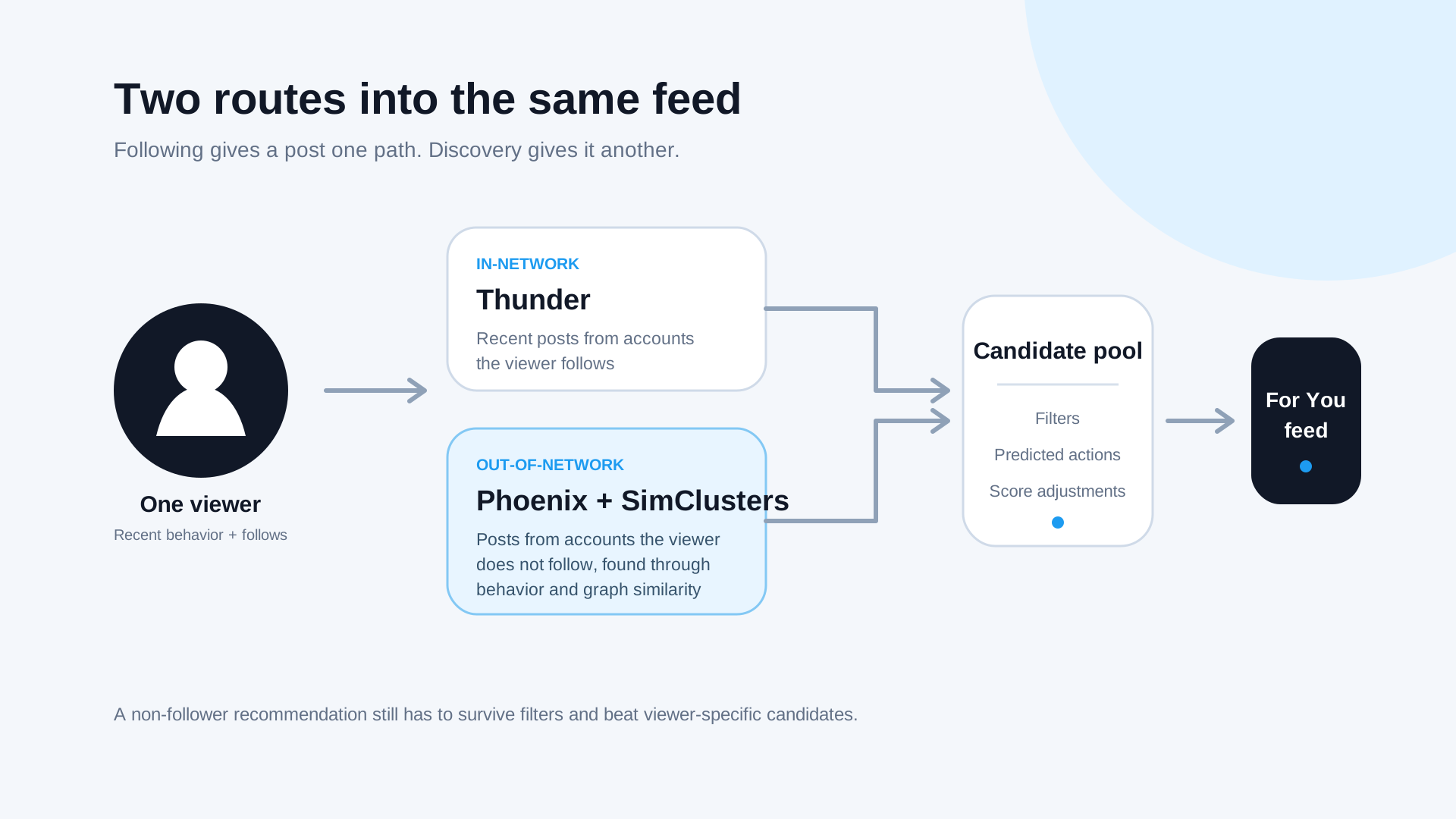
X keeps followed and discovered posts separate at first
The official X algorithm repository describes two candidate sources:
- Thunder keeps recent posts from accounts the viewer follows available as in-network candidates.
- Phoenix retrieval and SimClusters find out-of-network candidates from accounts the viewer does not follow.
The sources are queried in parallel. Their candidates later enter the same scoring model, but their route into the pool and some later adjustments differ.
Phoenix retrieval starts from recent behavior
Phoenix reads the viewer's recent action sequence. The published model uses that history to retrieve possible posts and later predict responses to each candidate.
The useful point for a creator is not the model name. It is that recommendations are built around observed interests. A post about Phoenix LiveView may be a strong candidate for a viewer who repeatedly engages with Elixir content and irrelevant to someone whose recent activity is about photography.
That example is an inference from the viewer-centered design, not a promise that mentioning a precise topic creates distribution. X does not publish a keyword recipe for entering Phoenix retrieval.
SimClusters adds another discovery route
The official README describes SimClusters as a cluster-similarity source. It adds candidates from outside the viewer's network alongside Phoenix retrieval.
This creates a second way to think about discovery: a recommendation can come from learned similarity between interests and communities, even when the viewer has no direct follow relationship with the author.
It does not mean that creators should chase a broad "community score." The repository exposes a retrieval system, not a dashboard metric you can optimize directly.
Out-of-network posts face a harder path
After retrieval, out-of-network candidates pass filters and ranking adjustments that do not apply in exactly the same way to followed accounts.
The published pipeline shows that:
- replies and reposts from accounts the viewer does not follow can be removed before scoring;
- some visibility rules run only for out-of-network recommendations;
- the ranking score applies an out-of-network discount;
- the remaining candidates still compete with in-network posts chosen for the same viewer.
Discovery is possible, but the code does not describe equal treatment between a familiar account and an unfamiliar one.
Why a post can reach followers but stop there
A post may perform inside its existing network without becoming a strong out-of-network candidate. The public code cannot identify the exact reason for one post, but it suggests several different possibilities:
- Retrieval systems did not select it for enough relevant non-followers.
- It was selected, then removed by a filter that applies to that viewer or recommendation context.
- It survived, but its predicted response did not beat the other candidates.
- It ranked well initially, then moved after score adjustments or reranking.
This is why "my followers liked it" does not guarantee broader reach. The next audience is selected by a different path.
Practical tests that do not depend on algorithm folklore
The repository does not prove that one post structure, topic frequency, or publishing time unlocks non-follower reach. You can still make useful tests from what it shows.
Make the topic legible to the intended reader
A stranger has less context than a follower. Name the concrete problem, product, decision, or result early enough that the right person can recognize why the post matters.
This advice comes from reader behavior, not a claim that X rewards a particular sentence pattern.
Compare repeated topics instead of isolated winners
One post can travel because a larger account shared it or because it landed inside an unusual conversation. Group several original posts about the same problem before deciding that the topic creates discovery.
Watch qualified actions, not impressions alone
More impressions can come from people who will never care about your work. Profile visits, follows, useful replies, and product interest help distinguish relevant discovery from empty reach, where those metrics are available.
Keep original posts available on your profile
Replies can introduce you inside existing conversations, while original posts show a new profile visitor what you know and build. Our posts versus replies analysis explains why the two formats should be measured separately before you compare them.
Use your account to decide what deserves another test
PilotMyX cannot tell you which private retrieval source selected a post or how many impressions came from non-followers. It can help you compare the observable results of repeated topics, openings, publishing times, original posts, and replies without letting one outlier decide the strategy.
Use the public algorithm to frame the question:
Which topics repeatedly create useful attention beyond my normal baseline, and what do those posts give a new reader before they know me?
Then use your account history to decide what belongs on the calendar again.
Use your own account