Engagement diagnosis
Why Are My Tweets Not Getting Engagement?
Low engagement is a symptom, not a diagnosis. Before you change your voice, posting time, or entire strategy, find out whether the problem is reach, relevance, conversion, or one misleading comparison.
On this page
The short answer
Your tweets may be getting less engagement because fewer people see them, the topic reaches the wrong people, the opening gives them no reason to stop, or you are comparing a normal week with an unusual spike.
A shadowban is possible in some situations, but it should not be the first explanation you reach for. Start with what your account data can actually show.
First, check whether reach or response changed
Engagement and reach are different problems.
If impressions fell while the engagement rate stayed close to normal, the people who saw the posts responded about as often as before. Distribution changed more than the content response.
If impressions held steady but engagement rate fell, the audience still saw the posts and found fewer reasons to act. Look harder at topic, opening, clarity, and audience fit.
If both fell, compare the content mix and the baseline before drawing a conclusion.
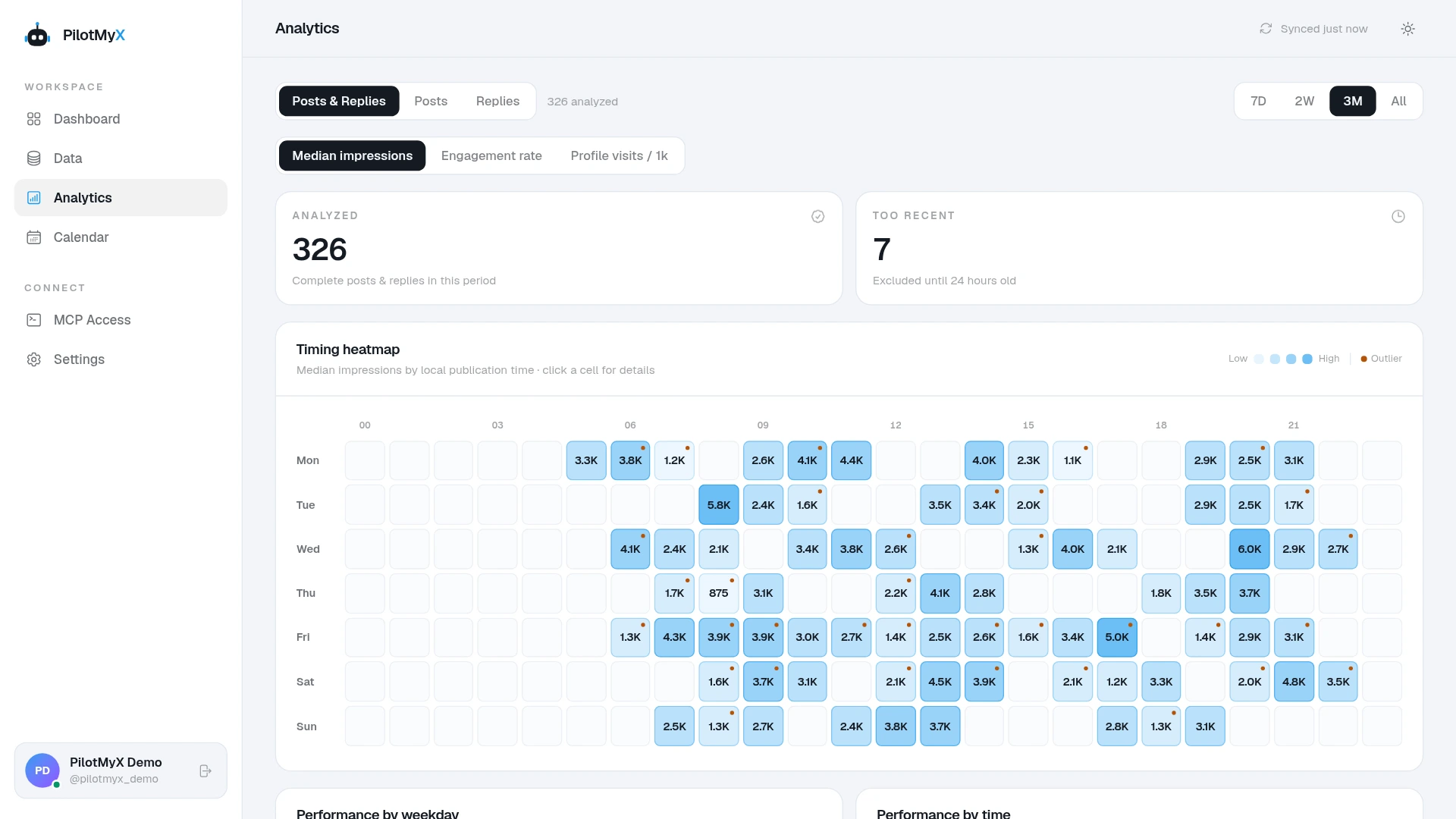
X defines an impression as the number of times a post appeared on a screen, not the number of unique people who saw it. One person can create more than one impression, so treat the metric as exposure rather than audience size. The definition comes from the official X metrics documentation.
Make sure the comparison is fair
“This week versus last week” sounds reasonable until last week contained a viral debate, a launch, or a repost from a large account.
Compare these before you call the account broken:
- the number of posts and replies you wrote;
- the topics you covered;
- the mix of links, media, quotes, and plain text;
- the largest one or two results in each period;
- the median result, not only the average;
- whether the same audience was likely interested in both periods.
A normal week can look weak beside one unusual debate, launch, or repost from a large account. Remove the largest result from both periods and compare them again. If the conclusion changes completely, the problem was your baseline rather than every post published afterward.
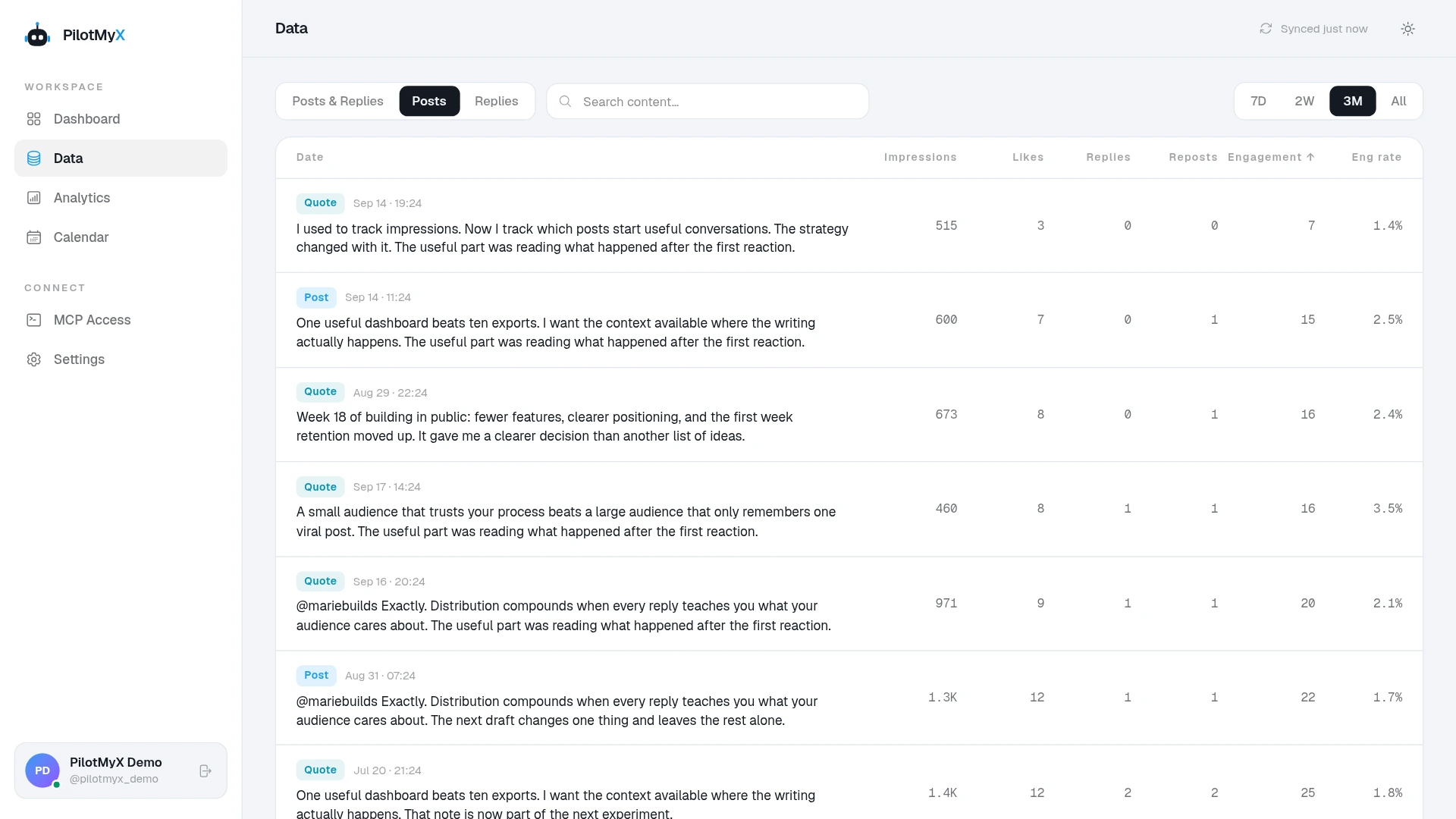
The same check matters when comparing formats. Our posts versus replies guide explains how publishing volume and outliers can distort the answer.
Read the opening as a stranger would
Most weak openings are not “bad writing.” They are missing a reason to keep reading.
Look at the first line by itself. Does it name a situation the reader recognizes? Does it create a specific question? Does it offer a result, tension, or opinion worth resolving? Or does it begin with background that only matters after someone already cares?
Compare your stronger and weaker posts without copying the winners word for word. You are looking for the job the opening performed.
Examples of useful differences:
- concrete problem versus broad topic;
- surprising result versus vague progress update;
- clear opinion versus neutral summary;
- immediate consequence versus a long setup;
- language your audience uses versus internal product language.
Check whether the topic brought the audience you want
A post can get excellent engagement and still move the wrong account forward.
If you build developer tools, a broad argument about trading or politics may travel much further than a product lesson. That does not make the post worthless. It does mean you should separate raw reach from qualified attention.
Profile visits, follows, link clicks, and the quality of resulting conversations can help. None is a perfect conversion metric alone, but together they show whether the post created curiosity about you rather than only the debate.
Do not judge replies by the post’s reply count
The reply_count on your post tells you how many responses the post received. It does not tell you how the replies you wrote elsewhere performed.
If conversations are a large part of your activity, analyze those replies as their own content type. You may find that they create discovery while original posts qualify profile visitors. You may also find that one large conversation distorts the whole picture.
The point is to understand the roles, not declare one format the winner.
Test timing after topic and sample size
Timing matters, but it is easy to overfit.
One post at 9:00 a.m. and one at 4:00 p.m. do not establish a best time. Group comparable content over enough days, use the account’s local timezone, and inspect how many items sit behind each apparent peak.
If the best cell contains one viral post, you found a timestamp attached to an outlier. If several similar posts repeat the result, you found a time worth testing again.
Run this 20-minute diagnosis
- Pick the weak period and the immediately preceding period.
- Compare impressions, engagement rate, profile visits, and publishing volume.
- Remove the top result from each period and compare again.
- Group the remaining posts by topic and content type.
- Read the openings of the strongest and weakest comparable items.
- Inspect timing only where the sample is large enough to be useful.
- Choose one change for the next three posts.
Do not change topic, format, timing, frequency, and voice at once. You will not know what helped.
What to do next
Write one sentence that completes this template:
Engagement fell mainly because ___, and my next three posts will test ___ while I watch ___.
If you cannot fill the first blank with evidence, keep diagnosing. If you can, put the test on the calendar and give it enough repetitions to teach you something.
Use your own account