Mutual follower boost
Does X/Twitter boost posts from mutual followers? What the code shows
X did add a ranking boost for original posts from mutual followers in July 2026. The implementation is narrower than the rumor: it changes the weight on a predicted response for eligible posts, inside a larger viewer-specific score.
The short answer
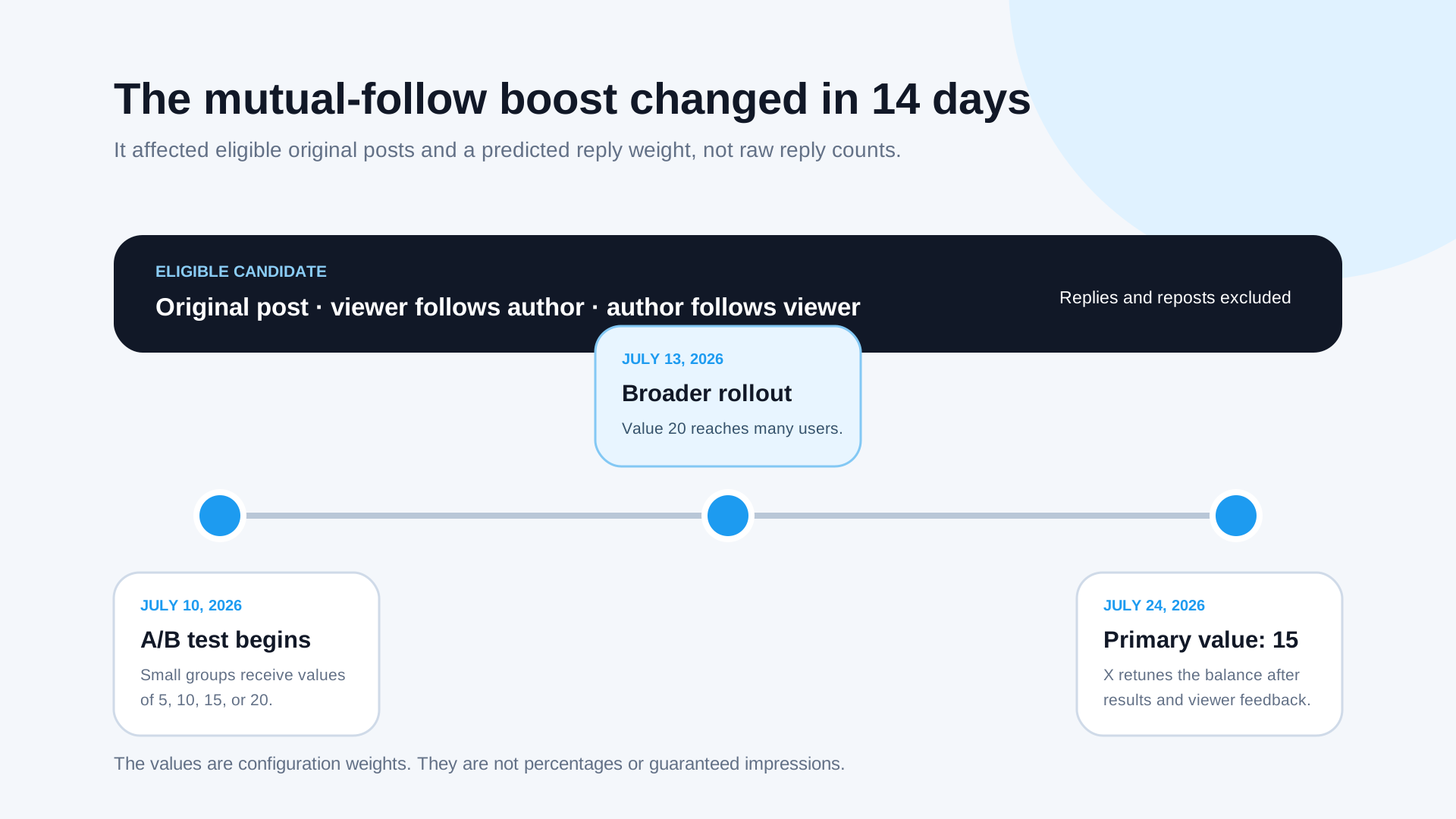
Yes. X/Twitter published a July 2026 change that boosts eligible original posts from accounts the viewer follows and that follow the viewer back.
The boost does not add points for an actual reply already received. It increases the weight applied to the model's predicted probability that the viewer will reply to an eligible post from a mutual follow.
Replies and reposts are not eligible for this boost. Mutual status also does not guarantee distribution because the adjusted prediction remains one part of a larger score, followed by selection, reranking, and visibility checks.
What X changed
X calls the relationship "bidirectional follow." The viewer follows the author, and the author follows the viewer.
The published implementation first checks that the candidate:
- is an original post rather than a reply;
- is not a repost;
- comes from an author with a mutual follow relationship to the viewer.
For eligible candidates, the ranking code adds a configurable boost to the weight on predicted reply probability. X also tested a dwell-weight boost in the first experiment, but its published change history says that part was not shipped broadly.
The July 2026 timeline
The repository documents three stages.
| Date | Published change |
|---|---|
| July 10 | X began an A/B test with reply-boost values of 5, 10, 15, or 20 for small groups; most viewers remained at 0 |
| July 13 | X rolled out a value of 20 to many viewers while continuing other experiment groups |
| July 24 | X changed the primary value from 20 to 15 after experiment results and feedback about out-of-network discussion visibility |
The numbers are configuration values applied to a prediction weight. They are not "extra impressions" and should not be read as percentages.
Why X reduced the value
X says feedback during the World Cup pointed to a tradeoff: people wanted to see more discussion from accounts they did not follow, while a stronger mutual-follow boost favored familiar accounts.
Reducing the value from 20 to 15 did not remove the boost. It adjusted the balance between posts from mutuals and other candidates.
This is a concrete example of why ranking advice expires. A change can improve one goal, create a cost elsewhere in the feed, and be retuned within days.
What the change does not prove
The code does not support these conclusions:
- following people at random will create guaranteed reach;
- every mutual follower will see every original post;
- replies written by mutuals receive the same boost;
- one predicted reply signal overrides every other positive or negative signal;
- the documented primary value applies to every viewer in every experiment.
The ranking signals guide explains the main source of confusion. The boost changes a weight on a viewer-specific prediction. It does not reward a raw reply count after publication.
What it suggests about relationships
The change confirms that the relationship between viewer and author can affect ranking. That is different from proving that mutual-follow growth tactics work.
A mutual relationship created through genuine shared interest may come with relevant viewer history, useful conversations, and a real reason to respond. A mass-follow exchange can create the graph edge without creating any of that interest.
The code can identify the relationship. It cannot manufacture the viewer's desire to read the post.
Original posts and replies still do different jobs
The mutual boost applies to eligible original posts, not replies. Replies can still introduce an account inside conversations and provide useful voice or audience data, but this published change should not be used to claim that reply activity receives the same ranking adjustment.
If you are deciding where to spend your time, compare both formats by their role and by your own results. The posts versus replies guide shows how to avoid declaring a winner based on volume alone.
PilotMyX analyzes the replies you write, but it does not schedule replies. Its scheduler is for original posts from your account.
The useful test for your account
You cannot isolate this boost from ordinary account analytics because X does not expose the prediction or adjusted score. You can still ask a narrower question:
Do original posts aimed at people who already know my work produce a different pattern from posts designed to introduce one clear idea to a new audience?
PilotMyX can help compare those content groups, inspect the examples behind the totals, and schedule the next original post you approve. It will not label the result "caused by mutual boost," because the available data cannot prove that.
Use your own account